
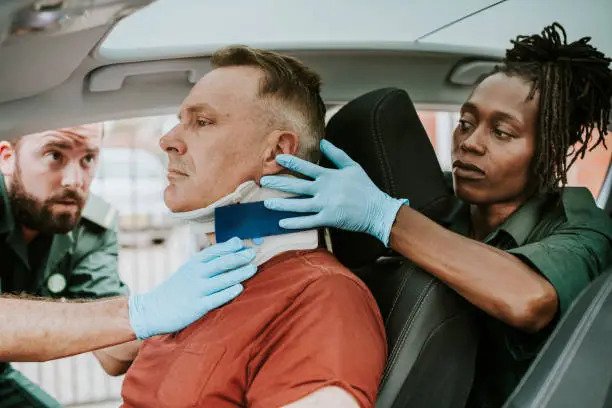
An auto accident chiropractor is often the first clinician who can move you from painful confusion to clear progress after a crash. Even low-speed fender-benders transfer enough force to strain joints, bruise muscles, and jar the delicate ligaments that stabilize your spine. In Frederick, where I-270 traffic stops and starts without warning, these injuries are common, and they rarely heal well if you “wait and see.” Prompt, skilled chiropractic care calms inflammation, restores motion, and helps you reclaim daily life without pills or prolonged downtime.
This blog explains which injuries respond best to chiropractic treatment, why local expertise matters, what happens at each visit, and how to decide when it’s time to book your first appointment. You’ll also find practical answers to the questions patients ask most, along with a simple action plan for the next step in your recovery.
Common Injuries Treated After Auto Accidents
An automotive collision imparts kinetic energy to the human body in a fraction of a second. While seat belts, airbags, and headrests mitigate the most severe injuries, residual forces are absorbed by soft tissues and spinal structures—namely, muscles, intervertebral discs, facet joints, and neural elements. These structures often sustain injury, prompting clinical evaluation and intervention by chiropractors.
- Whiplash-associated disorders, stemming from rapid cervical acceleration and deceleration, frequently cause overstretching of neck ligaments. Patients typically present with cervical stiffness, cephalgia, and interscapular burning sensations.
- Lumbar sprain-strain injuries occur when abrupt forward momentum, restrained by a seat belt, stresses the lower back. This mechanism injures paraspinal muscles and facet joint capsules, leading to persistent, deep lumbar pain exacerbated by sitting or standing.
- Thoracic joint fixation is another common outcome of seat belt or steering wheel impact. The resulting hypomobility in mid-thoracic vertebrae restricts spinal rotation and may produce discomfort during respiration.
- Herniated or bulging intervertebral discs result from compressive trauma, which forces disc material outward, potentially impinging on nerve roots and manifesting as distal paresthesia or radiculopathy.
- Sacroiliac joint dysfunction may follow lateral hip impact against a car door or console, destabilizing the articulation between the pelvis and spine, and eliciting acute pain during transitional movements, such as rising from a seated position.
- Myofascial trigger points often develop through reflexive muscle splinting, forming localized contractures that refer pain to remote anatomical sites, sometimes mimicking deeper articular pathology.
- Post-traumatic headaches frequently arise from upper cervical irritation, causing altered cerebrovascular dynamics and neural activity, which manifest as persistent headaches unresponsive to standard analgesics.
If unaddressed, these sequelae may progress to chronic pain syndromes, substantially impairing occupational, recreational, and sleep function. Early and targeted chiropractic management is essential to disrupt this pathological trajectory.
How Chiropractic Care Supports Auto Accident Injury Recovery
Even low-speed car accidents can have a surprising impact on the body, joints may become misaligned, ligaments overstretched, and muscles strained. Chiropractic care addresses these issues by not simply alleviating pain but by targeting the underlying mechanical disruptions that can impede complete recovery. Rather than depending solely on pharmaceuticals to mask discomfort, chiropractic intervention emphasizes restoring natural movement and supporting the healing of affected tissues. This approach aims to correct the source of dysfunction, promoting genuine and lasting rehabilitation.
Whiplash and Neck Pain Treatment
During a chiropractic consultation, the practitioner typically begins by obtaining a comprehensive patient history and performing orthopedic assessments to evaluate the condition. In some cases, digital X-rays or dynamic motion studies are utilized to exclude the possibility of fractures or cervical instability.
Treatment approaches frequently include precise, low-force adjustments of the atlas and axis vertebrae, the uppermost cervical segments, which aim to alleviate tension on the brainstem and associated cranial nerves. For acute presentations or cases where traditional manual manipulation is contraindicated, clinicians may employ instrument-assisted mobilization. This technique utilizes handheld devices to deliver controlled, micro-impulses to the cervical joints, restoring mobility without the need for forceful neck rotation.
Additionally, neuromuscular re-education is often incorporated through the use of elastic resistance bands and sensorimotor exercises. These interventions target the deep cervical flexor muscles, promoting functional stability and reducing the risk of recurrent injury. Kinesiology taping may also be applied; this elastic tape is theorized to enhance lymphatic drainage and provide a proprioceptive cue to facilitate muscle relaxation.
Back Pain and Soft-Tissue Injury Relief
Management of lumbar and thoracic injuries typically involves both manual interventions and structured rehabilitation exercises. Techniques such as Diversified or Drop-Table adjustments utilize precise, controlled thrusts, or table-assisted movements, to address spinal misalignments, often with minimal applied force.
Myofascial release is another vital component, involving sustained pressure along muscle fibers to alleviate adhesions. By targeting these problematic areas, practitioners can reduce abnormal tension that may contribute to vertebral dysfunction.
Disc decompression employs computer-assisted traction to gently separate the vertebrae. This process creates negative pressure, encouraging herniated or bulging disc material to retract, thereby reducing nerve irritation.
Finally, core stabilization exercises, progressively advancing through planks and bridges, are essential for teaching the abdominal and gluteal muscles to provide support. This redistribution of load helps to alleviate excessive stress on injured spinal segments, promoting more effective recovery.
Why Choose a Chiropractor in Frederick for Auto Accident Injuries
Selecting care within your local community presents several distinct benefits.
First, access to treatment is typically expedited, often enabling same-week appointments. Early intervention can reduce the risk of complications such as excessive scar tissue formation, which is clinically significant. Local providers tend to have established referral networks with specialists, imaging facilities, and legal professionals. This network not only streamlines communication but also simplifies administrative processes, which can be especially helpful in cases involving personal injury claims.
Familiarity with state-specific regulations is another key advantage. For instance, Maryland’s personal-injury protection (PIP) laws differ from those of neighboring states, and practitioners in Frederick are well-versed in documenting clinical findings to facilitate efficient insurance claims processing. There is also the benefit of community reputation. Patients can more easily verify the quality of care through recommendations from neighbors, colleagues, and city-specific online reviews.
Finally, proximity allows for more convenient follow-up care. Whether one’s schedule revolves around employment at Fort Detrick, coursework at Hood College, or family obligations near Route 40, local providers can better accommodate ongoing treatment needs.
What to Expect During Your Chiropractic Auto Injury Treatment
Initial Assessment
The process begins with a thorough intake interview, encompassing a detailed discussion of the accident circumstances, symptom chronology, relevant medical history, and lifestyle considerations. Patients are encouraged to provide any available documentation such as police reports, emergency room records, and diagnostic imaging for a more comprehensive evaluation.
Physical Examination
A systematic neurological and orthopedic examination follows, utilizing reflex testing, range-of-motion assessment, and palpation to accurately localize affected tissues.
Imaging and Diagnostics
Where clinical uncertainty persists, diagnostic imaging—digital X-rays, MRI, or ultrasound—may be recommended to further assess structural integrity or identify potential contraindications.
Individualized Treatment Planning
Based on the findings, a tailored care plan is devised and documented. This plan specifies visit frequency, modalities to be employed, anticipated clinical milestones, and prescribed home exercises to support rehabilitation.
Therapeutic Intervention
Initial treatment sessions prioritize pain management through gentle manual adjustments, soft tissue techniques, and adjunctive physiotherapeutic interventions such as cold laser therapy or electrical stimulation, as indicated.
Ongoing Evaluation
Progress is systematically monitored at regular intervals, with objective measures—range of motion, strength, and functional capacity—guiding ongoing modifications to the care plan.
Transition to Maintenance
Upon attainment of treatment goals, patients transition to a maintenance phase, which includes periodic re-evaluations and a self-management protocol to reduce recurrence risk.
Throughout all phases of care, clear communication and informed consent are prioritized, ensuring patients remain engaged and comfortable with all clinical procedures performed.
Frequently Asked Questions (FAQs)
1. How soon after an accident should I see a chiropractor?
Seeing a chiropractor as soon as possible after an auto accident is key to a faster, smoother recovery. Micro-tears and joint misalignments can trigger inflammation within hours, and scar tissue may begin forming in as little as two weeks. Visiting a chiropractor within the first 72 hours allows for gentle adjustments and mobilization before stiffness and long-term issues set in. Even if the emergency room cleared you, symptoms like headaches, neck pain, or mid-back tightness often appear days later. A prompt chiropractic evaluation can catch underlying problems early, making them easier to treat. Early care also reduces the risk of chronic pain developing down the road.
2. Is chiropractic care effective for whiplash?
Yes, chiropractic care can be highly effective for neck injuries following an auto accident. Research shows that spinal manipulation, especially when combined with targeted exercises, significantly improves neck mobility and reduces pain more than rest or using a soft collar alone. Chiropractic adjustments help restore proper joint movement, while soft-tissue therapy relieves muscle tension and guarding. Many patients also report fewer headaches and a reduced need for pain medication after several sessions. This approach not only speeds recovery but also helps prevent long-term complications.
3. Will insurance cover chiropractic treatment after an accident?
Most auto insurance policies in Maryland include Personal Injury Protection (PIP), which covers medical expenses including chiropractic care regardless of who was at fault. This allows you to start treatment immediately without waiting for a legal settlement. If another driver is found liable, their bodily injury liability coverage may also reimburse your costs as part of the final settlement. Many chiropractic clinics experienced with accident-related care will handle billing directly with your insurance, reducing the financial burden on you. This ensures you get the care you need without delay or out-of-pocket stress during the claims process.
4. How long does recovery usually take?
Recovery timelines after an auto accident can vary depending on the severity of your injury. Minor soft-tissue strains often improve within four to six weeks of consistent chiropractic care. More moderate cases, like whiplash or disc irritation, may take eight to twelve weeks especially if your daily activities involve lifting or prolonged sitting. Your chiropractor will guide you through distinct phases of care: acute pain relief, corrective treatment, and long-term stabilization. This structured approach ensures steady progress and helps set clear expectations, so you’re not left guessing when your treatment will end.
5. Can chiropractic care prevent long-term complications?
Absolutely. Completing a full chiropractic care plan after an auto accident plays a key role in preventing long-term complications. Restoring proper joint motion, correcting posture, and strengthening supportive muscles help reduce the risk of chronic stiffness, recurring headaches, and even early disc degeneration. Patients who follow through with their treatment and continue with periodic spinal check-ups often experience fewer flare-ups and better overall function. In contrast, stopping care too early—just because the pain fades can leave underlying issues unresolved and more likely to return. Long-term wellness depends on addressing both symptoms and their root causes.
Pain doesn’t have to dictate your schedule or steal your sleep. If you’ve been in an auto accident near Frederick, book a no-pressure chiropractic evaluation today. You’ll leave the first visit with clear answers, a step-by-step recovery map, and the confidence that dedicated hands are guiding your healing. Schedule online or call now—relief and renewed movement are closer than you think.